Digital Demand Generation vs Lead Generation: What's the Difference?
Digital Demand Generation vs Lead Generation: What's the Difference?
 General
Most small business owners judge marketing by one number: how many enquiries came in this month. Digital demand generation asks a different question, namely how many of the right people know you and trust you before they ever need you. Lead generation captures interest that already exists, while demand generation creates it. Both matter, and they work best together. If you are still pinning down what counts as a digital lead in 2026, start there. This guide compares the two on goal, audience, content, metrics and timeline, then shows how to balance them on an Irish SMB budget.
Key Takeaways
- Digital demand generation builds awareness and trust with people who are not buying yet, so there is someone to capture later.
- Lead generation turns existing interest into named contacts, but on its own it harvests a pool of ready buyers that eventually runs low.
- A small budget works best with a modest, steady demand effort feeding a tight capture and follow up process.
What is digital demand generation, and how is lead generation different?
Digital demand generation is the online work that makes the right people aware of a problem, see you as a credible answer and remember your name. It does not ask for contact details. Think helpful articles, short explainer videos, honest opinions on LinkedIn and a Google Business Profile full of real photos and answered questions.
Lead generation starts where that interest already exists. Its job is to turn a curious visitor into a named contact you can follow up with: a form, a call, a booking or a download. If demand work fills the room, lead work is the conversation at the door. Our guide to the step by step process from first click to sale covers that capture side in detail.
The confusion arises because one channel can do both jobs. A LinkedIn post that teaches something builds demand. The same post with a form asking for an email address is lead capture. What separates them is intent: are you earning attention or collecting details? Naming that intent for each piece of marketing keeps your budget honest.
For Irish small businesses the distinction matters because most local markets are a limited pool. An accountant in Kilkenny or a kitchen fitter in Athlone cannot rely on an endless stream of strangers. They need people who already recognise the name when the need finally arrives.
What does demand generation look like for an Irish small business in practice?
It looks less like a campaign and more like a habit. A physiotherapy clinic in Tullamore might post a short weekly video answering one question patients ask at the desk, such as when to rest an injury and when to move it. None of those videos asks for a booking, yet people book because they already trust the voice.
A B2B example works the same way. An IT support firm in Galway could publish a plain English explainer each month on a problem its clients face, from phishing emails to backups. The owner shares each one on LinkedIn with a personal note. Over time, prospects arrive at the first call already agreeing with the firm's approach.
Local service businesses can do much of this through their Google Business Profile. Regular posts, real photos of finished jobs and honest answers to common questions all build familiarity before anyone picks up the phone. Reviews you reply to thoughtfully do the same work in public.
Notice what these examples share. Each one is useful on its own, each speaks to people who are not buying today, and each is repeated long enough to be remembered. The value comes from consistency rather than any single post, which is why a modest weekly effort usually beats an occasional big push.
How do demand and lead generation differ in goal, audience, content and metrics?
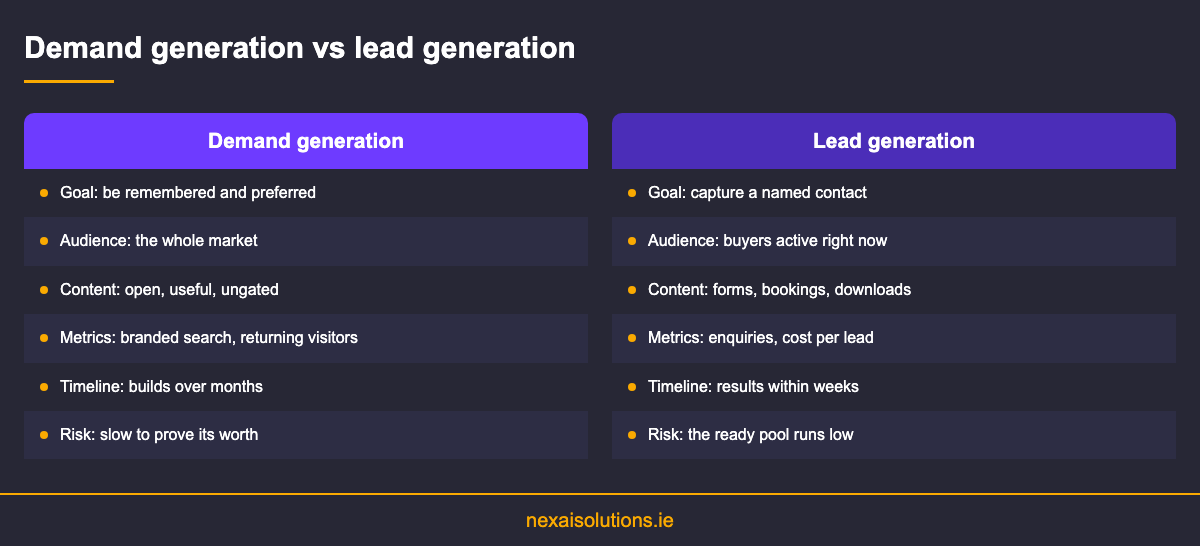
The goal of digital demand generation is preference: when someone in your market starts looking, you are already on their shortlist. The goal of lead generation is a contact record with enough context for a sales conversation. One is measured in memory, the other in names.
The audiences differ too. Demand work speaks to the whole market, including the large group with no need today who will have one next quarter or next year. Lead work focuses on the smaller group who are researching, comparing or ready to buy right now.
Content follows from that. Demand content is open and generous: guides, explainers, opinion pieces and customer questions answered in public. Lead content asks for something in return, such as a quote request, a booking slot, a template download or a consultation. Gating your best thinking too early limits how far it travels.
Metrics and timelines split the same way. Lead generation reports quickly on enquiries, cost per lead and conversion to customer. Digital demand generation shows up slowly, in branded searches, returning visitors, profile views and enquiries that open with 'I've been following your posts'. Expect months rather than weeks before that signal is clear.
Why do small businesses that only chase leads run dry?
Lead focused campaigns feel efficient because every euro has a visible result. The catch is that they only harvest people who are already in the market. Once you have reached most of those buyers, each new lead costs more and quality slips, because you are scraping the edges of your audience.
Paid search shows this clearly. You can bid on people searching for your service today, but you cannot bid on people who have not started looking. If nobody has heard of you, you also compete purely on price and ad position against bigger, better known names.
Lead only marketing tends to produce colder contacts as well. Someone who downloads a checklist from a stranger rarely answers the follow up call. Someone who has read three of your articles and seen your team on LinkedIn is far more likely to. Demand work makes every capture step after it perform better.
There is a compliance angle too. Chasing volume pushes businesses toward bought lists and aggressive email, which runs into Irish and EU rules on electronic marketing. The Data Protection Commission publishes guidance on consent and direct marketing, and it is worth reading before any campaign that collects personal data.
How can an Irish SMB balance digital demand generation and lead generation on a small budget?
You do not need two teams or two budgets. You need a small, steady demand engine and a capture process that wastes nothing. The order matters: tighten capture first so the interest you create is not lost, then build demand consistently.
Making capture tight means a clear next step on every page, every enquiry landing in one place and a prompt, personal reply. Then pick one or two channels where your buyers already spend time and publish something useful there every week. Our explainer on how each marketing channel plays its part in the funnel will help you choose.
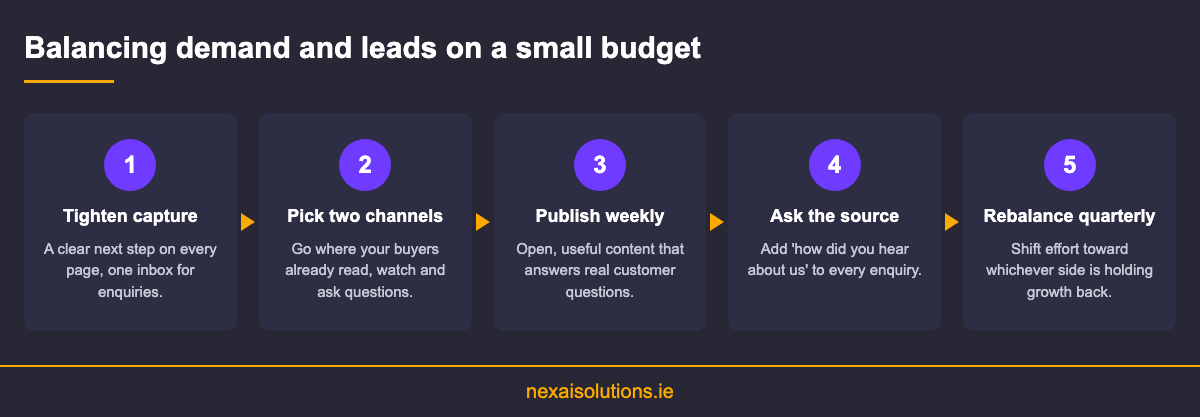
Review the balance every quarter. If leads are plentiful but poor, put more into content that educates buyers before they enquire. If people know you but rarely get in touch, sharpen your offers and calls to action. Ask every new enquiry how they heard of you, because that one answer tells you more than most dashboards.
Software helps a small team keep both running. AI content generation with social scheduling keeps publishing consistent, while a mini CRM records every enquiry in one place. If you would rather hand the work to someone else, our notes on hiring a marketing partner outside Dublin explain what to look for.
Conclusion
Lead generation pays the bills this month. Digital demand generation decides whether there is anyone left to capture next year. Small Irish businesses rarely need much more of one than the other; they need a capture process that loses nothing and a modest, consistent effort to be known before the need arises.
If you would like help finding that balance for your budget, book a free consultation with the NexAI Solutions team and we will look at what you already have running.
Frequently Asked Questions
What is digital demand generation?
It is the online work that makes your target market aware of a problem and sees your business as a credible answer before anyone is ready to buy. It relies on useful, open content rather than forms or sales calls.
Is demand generation the same as brand awareness?
Not quite. Brand awareness is about being recognised. Demand generation goes further, teaching buyers why a problem matters and why your approach solves it, so that recognition becomes preference when they are finally ready to buy.
Which should a small business start with?
Fix lead capture first so no existing interest is wasted: clear calls to action, one inbox and prompt replies. Then add a steady demand effort. Our guide to practical strategies for a tight budget shows where to begin.
How long does demand generation take to show results?
Expect it to build over months rather than weeks. Early signs include more branded searches, returning website visitors, profile views and enquiries from people who mention your content. Lead campaigns report sooner but tend to plateau without it.
How can I measure demand generation without expensive tools?
Add a 'how did you hear about us' question to every form and call. Track branded searches in Google Search Console, views in your Google Business Profile and returning visitors in your analytics, then review the trend each quarter.
Should demand generation content be gated behind a form?
Mostly no. A form limits how far your thinking travels and who sees it. Keep educational content open, and save forms for high intent offers such as quotes, bookings, consultations or a detailed template people genuinely want.
Does demand generation work for both B2B and B2C businesses?
Yes, though the channels differ. B2B buyers often research through search and LinkedIn over long cycles. Local consumers lean on Google Business Profile, reviews and social. Earning attention before asking for details works the same way for both.
Can AI help with digital demand generation?
AI can draft content, suggest topics and schedule posts so a small team publishes consistently. It still needs a person to add real expertise and local knowledge. The NexAI platform pairs AI content generation with scheduling and lead tracking.
Frequently Asked Questions
What is digital demand generation?

Is demand generation the same as brand awareness?
Which should a small business start with?
How long does demand generation take to show results?
How can I measure demand generation without expensive tools?
Should demand generation content be gated behind a form?
Does demand generation work for both B2B and B2C businesses?
Can AI help with digital demand generation?