Digital Lead Generation: The Complete 2026 Guide
Digital Lead Generation: The Complete 2026 Guide
 General
Digital lead generation is how a business turns online attention into named people who have asked to hear from it. For an Irish small business in 2026, that means enquiries arriving through search, maps, ads, social, email and your own website, often in the same week. This guide covers what counts as a lead today, which channels produce them, why quality beats volume, what GDPR asks of you at the point of capture, and why speed and tracking decide how many leads become customers. It is written for owners who want the whole picture before choosing where to spend.
Key Takeaways
- A digital lead is a named person who has shared contact details and given you a reason to follow up, not just a website visitor.
- Most Irish SMBs get the best return from a small number of channels run well, judged by lead quality rather than raw volume.
- Lawful capture, fast follow up and one place to track every enquiry matter as much as the channels that bring leads in.
What counts as a digital lead in 2026?
A digital lead is a person or business that has shared contact details with you online and shown a reason to hear more. A form submission, a call from your Google listing, a chat message or a booked consultation all qualify. A page view does not, and neither does a follower who has never been in touch.
The definition has widened over the last few years. Buyers now research on their phones, ask AI assistants for recommendations and compare reviews before they ever reach your site. By the time someone gets in touch, they often know your location, your services and what past customers say about you. That makes each enquiry warmer, but it also means you are judged before the conversation starts.
For a small business, digital lead generation is less about clever tricks and more about being findable, credible and easy to contact at the moment someone is ready. A Tullamore plumber, a Galway accountant and a Dublin software startup all face the same test. Can a stranger find you, trust you and reach you without effort?
It also helps to separate leads from customers. A lead is a possibility. Whether it turns into revenue depends on what happens next, which is why this guide spends as much time on follow up and tracking as on the channels themselves.
Which channels produce digital leads for Irish small businesses?
Most digital lead generation for small firms runs through a handful of familiar channels. The skill lies in knowing what each one does well, so you can match your effort to the way your customers actually buy.
Organic search and your Google Business Profile tend to lead for local service firms, because people search with a need and a place in mind. Google explains how relevance, distance and prominence shape local results in its Business Profile help on local ranking. Paid search sits beside them for urgent or high value needs, such as emergency repairs or commercial fit outs.
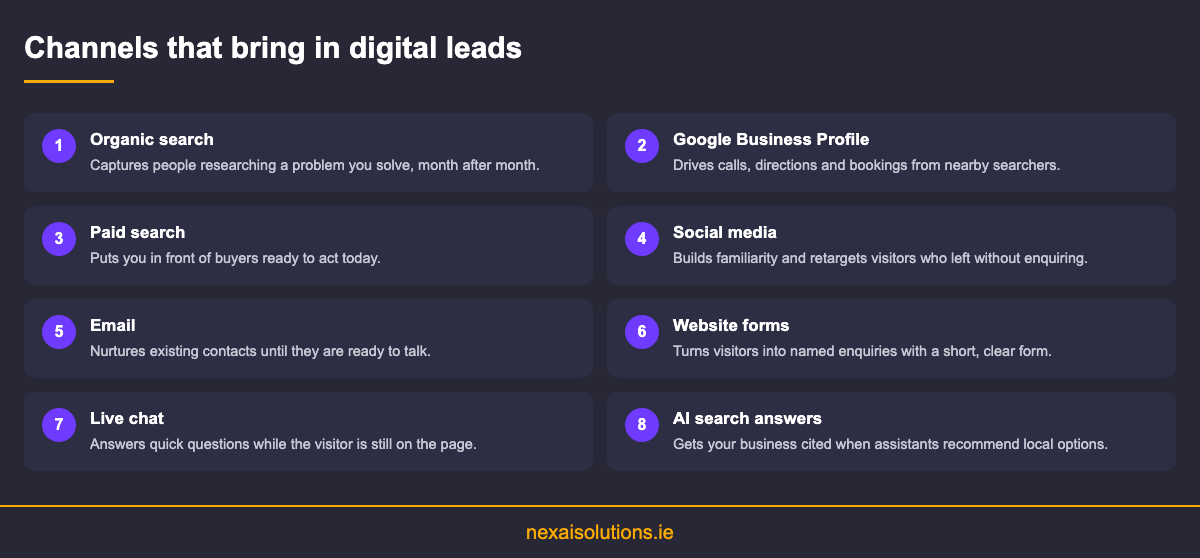
Social media works differently. It rarely produces a lead from a single post, but it builds familiarity, and retargeting ads can bring back people who visited your site and left. Email nurtures the contacts you already have, which makes it one of the cheapest channels to run once your list is in order.
Your website ties all of this together. Contact forms, booking tools and live chat are where most online enquiries finally land, whatever channel started them. AI search answers are another doorway, as assistants summarise local options and cite businesses with clear, consistent information. If you would rather have one partner run several of these channels, our overview of what a nationwide retainer covers explains what is usually included.
Is lead quality more important than lead volume?
Volume is easy to buy. A cheap ad with a broad audience can fill your inbox quickly, but if many of those enquiries sit outside your area or below your minimum job size, you have bought admin rather than business.
A quality lead fits your service, your location and your budget range, and arrives with enough intent for a real conversation. You can raise quality without spending more. Name your service area clearly, state who you work with, add a qualifying question or two to your forms, and write ads that say what you do not do as well as what you do.
Measure quality the simple way at first. Track how many leads each month became a booked call, a quote and a paying customer, and note which channel each one came from. After a couple of months, patterns appear. One channel may send fewer enquiries but far better ones, and that is where your next euro should go.
This is also the honest test for any agency or platform you hire. Ask how they report on qualified leads and sales, not just form fills. Good digital lead generation reporting follows each enquiry all the way to a sale. Our guide to hiring a marketing partner outside Dublin explains why regional firms often weigh attention and fit above an address in the capital.
What does GDPR mean for capturing leads online?
Every lead you collect is personal data, so GDPR applies from the first form field. You need a lawful basis for holding the details, a clear explanation of how you will use them and a way for people to ask you to delete them. That makes data protection part of digital lead generation itself, not a separate legal chore.
Marketing emails and texts carry extra rules. Ireland's ePrivacy Regulations govern electronic direct marketing, so do not add enquirers to a newsletter just because they asked for a quote. Use a separate, unticked opt in box and keep a record of when and how consent was given.
The Data Protection Commission publishes guidance for organisations of every size, and it is worth reading before you change your forms or buy a new tool. Check where your form data is stored, who on the team can see it and how long you keep enquiries that never became customers.
Good compliance also improves quality. People who knowingly opt in are more likely to read what you send, while bought lists and scraped contacts damage your sender reputation and your brand. Treat consent as part of the customer experience rather than a legal box to tick.
Why do fast follow up and one CRM make digital lead generation work?
Many lost leads are not lost to competitors with better ads. They are lost to silence. Someone fills in a form on Tuesday evening, hears nothing until Thursday, and by then has booked whoever called back first.
Set a response standard your team can actually keep, such as replying within the same working day, and automate the first touch. An instant confirmation email or text that says who will call and when buys you time and shows the enquiry landed.
The second fix is one place for every enquiry. When leads arrive by phone, form, chat, Facebook message and email, they scatter across inboxes and notebooks. A simple CRM records each contact, its source and its status, so nobody is chased twice or forgotten. It also gives you the channel data you need to judge quality.
This is the problem the NexAI platform was built around. A mini CRM for lead tracking sits alongside a unified dashboard across channels and performance reporting, so a small team can see where leads come from and what happened to each one. Digital lead generation only pays when the follow up is as organised as the marketing.
Conclusion
Digital lead generation in 2026 comes down to three habits. Be easy to find on the channels your customers use, capture enquiries lawfully and clearly, and follow up quickly from one organised system. Start with two or three channels, measure which leads turn into customers, and grow from there. If you would like a second opinion on where your next leads should come from, book a free consultation with NexAI Solutions. We work with small businesses across Ireland from our base in Tullamore, Co. Offaly.
Frequently Asked Questions
What is digital lead generation?
It is the work of attracting people online and persuading them to share their contact details so you can follow up. Search, Google Business Profile, ads, social media, email and your website forms are the usual sources for small businesses.
What is the difference between a lead and a customer?
A lead is someone who has shown interest and given you a way to contact them. A customer has paid. The gap between the two is closed by follow up, qualification and a clear offer, which is why tracking matters so much.
Which channel is best for a local Irish business?
For most local service firms, a complete Google Business Profile and a website that ranks for your service and town are the strongest starting points. Paid search adds speed when demand is urgent. The right mix depends on how your customers buy.
How many channels should a small business use?
Start with two or three you can run properly, rather than spreading a small budget thinly across six. Once you can see which channel brings leads that become customers, add the next one and measure again before expanding further.
Do I need consent to email people who enquire?
You can reply to an enquiry, but adding someone to marketing emails needs a lawful basis, usually clear opt in consent. Keep a record of when and how consent was given, and always include an easy way to unsubscribe.
How quickly should I respond to a new lead?
As quickly as your team can reliably manage, ideally within the same working day. An automatic confirmation that tells the person who will contact them and when helps, because it reassures them while you prepare a proper reply.
Should I hire an agency to win more leads?
An agency helps if you lack the time or skills to run several channels well. Before you sign anything, work through our agency buyer checklist so you know what to ask about reporting, contracts and who owns your lead data.
Can a business outside Dublin win leads from Dublin customers?
Yes, if your service suits customers there and your website and listings make that clear. Location pages and relevant ads both help. Our guide to choosing a marketing partner in the capital covers when a Dublin based agency is worth it.
Frequently Asked Questions
What is digital lead generation?

What is the difference between a lead and a customer?
Which channel is best for a local Irish business?
How many channels should a small business use?
Do I need consent to email people who enquire?
How quickly should I respond to a new lead?
Should I hire an agency to win more leads?
Can a business outside Dublin win leads from Dublin customers?