Digital Marketing and Lead Generation: How Channels Work Together
Digital Marketing and Lead Generation: How Channels Work Together
 General
Digital marketing and lead generation are often spoken about as two separate jobs. For an Irish small business they are really one job, because every channel you pay for should either help a buyer find you or help them get in touch. If you have read our complete guide to digital leads, you already know which channels produce enquiries. This article looks at the role each one plays in the funnel, how they strengthen each other over time, and why you need to see them side by side before moving budget between them.
Key Takeaways
- Some channels create demand and others capture it, so judge each one against the job it actually does.
- Search, Google Business Profile and paid search catch people who are already looking, while social and email build familiarity until they are ready.
- Channels compound when they share one message and one record of every lead, which is why attribution matters.
Which channels create demand and which capture it?
Every marketing channel sits somewhere between two jobs. Some put your business in front of people who were not looking for you yet. Others catch people who already have a problem and are searching for a fix. Both jobs matter, but they are measured differently and they pay back on different timelines.
Capture channels sit close to the enquiry. Someone types a service and a town into Google, finds your listing and rings you. Create channels work further back. A useful post on Instagram or LinkedIn rarely produces a call that afternoon, yet it shapes who that person thinks of when the need arrives next month.
Mixing up these two jobs is behind many wasted budgets. An owner switches off social because it never seems to bring leads, and later wonders why branded searches have gone quiet. If you want the formal stages a prospect passes through, we set out each step from first visit to closed sale in a separate guide. Here we stay with the channels themselves and the part each one plays.
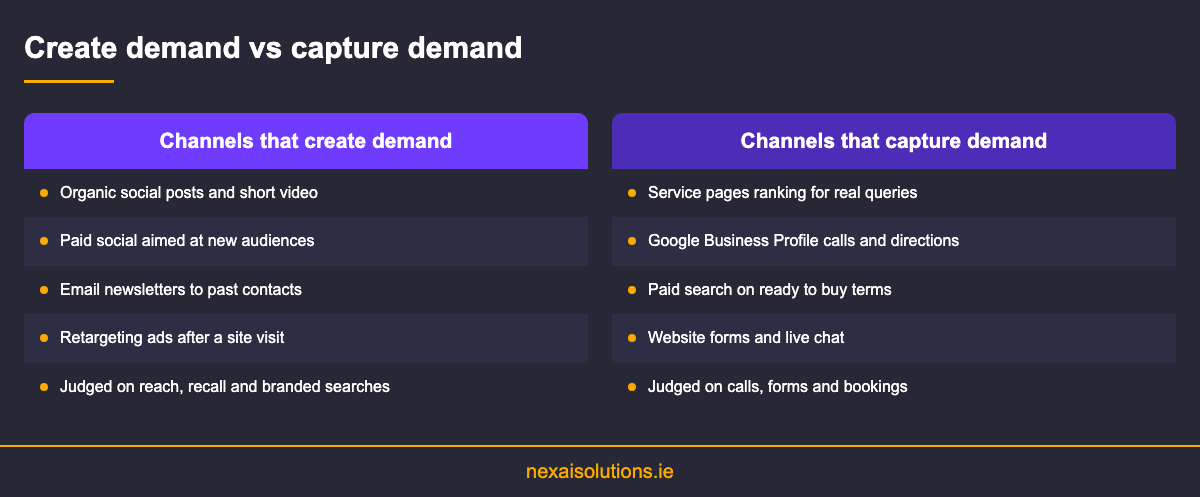
A simple test helps. For each channel, ask whether it is meant to produce enquiries this month or to make future enquiries easier. Then judge it only against that job. A newsletter will never match paid search on calls this week, and paid search will never build the goodwill that a year of helpful posts creates.
How do SEO, content and Google Business Profile turn searches into enquiries?
Search is where most people start once they know they have a problem. A homeowner in Athlone looking for an electrician, or a practice manager comparing payroll software, is telling you what they need in their own words. SEO and content exist to meet that research intent with a page that answers the question honestly.
Content works at two depths. Service pages catch people who are ready to compare providers. Guides and FAQs catch people earlier, while they are still working out what they need. Google's own starter guide to how pages get found is a sensible place to read more. The aim is a page that earns the click and then gives the reader one clear next step.
Google Business Profile does a different job. For local services, your profile can show your phone number, directions, opening hours and reviews before anyone visits your website. That makes it the shortest path from a search to a phone call. Google explains how local results are ranked, so read that before you change anything. Keep categories, services, hours and photos current, and reply to every review.
Search is also changing. Google now shows AI generated summaries above some results, and those summaries draw on pages that answer questions clearly. Plain headings, direct answers near the top of the page and accurate details about your service and area give you the best chance of being surfaced, whether a buyer reads a summary or scrolls to the links.
Where do paid search, social media and email fit in the funnel?
Paid search captures ready to buy intent on demand. You choose the queries, write the ad and pay when someone clicks. It is the fastest channel to switch on and the fastest to drain a budget if the landing page is weak. It suits searches that signal urgency, such as emergency callouts, quote requests or bookings.
Social media rarely closes a sale on the first view. Its role is familiarity. Regular posts show your work, your people and your standards, so your name already feels known when it appears in a search result. Paid social adds reach, and retargeting brings back people who visited your site and left, provided they agreed to tracking.
Email nurtures. Plenty of enquiries are not ready to buy on day one, and past customers will often need you again. A short, useful email every few weeks keeps you in mind without pushing. It also turns your contact list into a channel you own, rather than an audience you rent from a platform that can change its rules overnight.
Each of these channels also needs a good landing point. Paid search ads should send people to the matching service page, not your homepage. Social posts should link to something worth reading. Emails should point to one action. When a channel underperforms, check the page it sends people to before you blame the channel itself.
How do channels compound in digital marketing and lead generation?
Channels compound when each one makes the next more effective. A prospect sees a post, later searches your name, finds a strong Google Business Profile with recent reviews and calls. No single channel did that alone, and cutting any one of them would have weakened the chain.
Three things make compounding happen. The first is one consistent message, so the offer in your ads matches the offer on your page and your profile. The second is timing, because a retargeting ad matters most in the days after a visit. The third is a single record of every lead, so someone who downloads a guide and later rings you is recognised as the same person.
Compounding also happens inside a channel over time. A service page that ranks this year keeps bringing enquiries next year without extra media spend. Reviews collected today strengthen your profile for every future searcher. Paid media stops the moment you stop paying, which is why a balanced mix leans on owned assets as well as rented reach.
That third point is where small teams often slip. Leads arrive by phone, form, email and direct message, then scatter across inboxes and spreadsheets. The NexAI platform brings channels into a unified dashboard with a mini CRM, so each enquiry sits in one place with its source attached.
Why does attribution across channels matter?
Attribution means working out which channels played a part in each lead. Without it, budget decisions are guesswork. The last click usually takes the credit, which flatters paid search and branded search while hiding the social post or guide that started the journey.
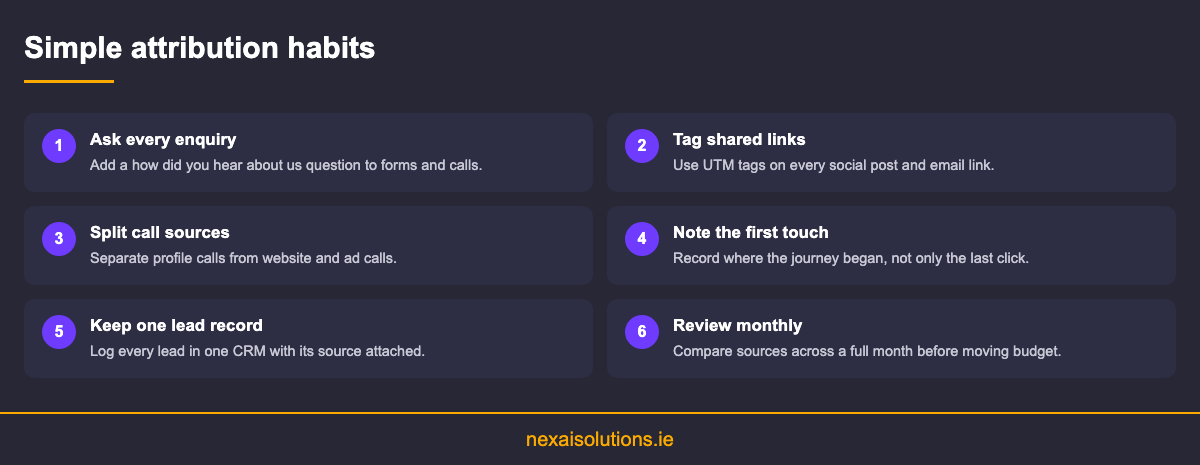
You do not need complex modelling to improve this. Ask every new enquiry how they heard of you and record the answer. Tag the links you share on social and in email. Keep profile calls separate from website calls. Then review the pattern monthly rather than reacting to one slow week.
If you work with an outside provider, ask how they report across channels rather than one channel at a time. Our overview of what a nationwide retainer covers is a useful starting point for that conversation. A good report shows the whole path, not a row of separate scorecards that each claim the same lead.
Conclusion
Digital marketing and lead generation work best when you stop asking which channel is best and start asking which job each channel is doing. Capture channels bring in this week's enquiries. Create channels fill next quarter's pipeline. One record of every lead tells you which mix is paying off. If you would like a second pair of eyes on how your channels fit together, book a free consultation with NexAI Solutions. We work with businesses across Ireland from our base in Tullamore.
Frequently Asked Questions
What is the difference between digital marketing and lead generation?
Digital marketing is the wider set of online channels you use to reach people, such as search, social, paid ads and email. Lead generation is the outcome you want from them: named enquiries you can follow up. One is the method, the other the goal.
Which channel brings leads fastest for a small business?
Paid search and a complete Google Business Profile usually produce enquiries soonest, because they reach people who are already searching. Paid search starts as soon as ads go live. SEO and social take longer to build but can lower your cost per lead over time.
Is social media worth it if it rarely produces direct leads?
Usually, yes. Social builds familiarity, so people recognise your name when they later search or see a recommendation. Judge it on reach, engagement and branded searches rather than direct enquiries, and use retargeting to bring interested visitors back to your site.
How does email support lead generation through digital marketing?
Email keeps you in touch with people who enquired but were not ready, and with past customers who may need you again. Because you own the list, it is not exposed to algorithm changes. Send useful content, not constant offers, and respect unsubscribes.
Do I need every channel running at once?
No. Start with the channels closest to the enquiry, usually search and your Google Business Profile, then add social and email as time and budget allow. You will find further practical guides for Irish small businesses on the NexAI Solutions blog.
What is retargeting and is it allowed under GDPR?
Retargeting shows ads to people who have already visited your website. In Ireland it relies on cookies or similar tracking, so visitors must give consent before tracking starts. A clear cookie banner and an honest privacy notice are the minimum requirements.
How can I tell which channel produced a lead?
Ask every new enquiry how they found you, tag the links you share on social and email, and log calls by source. Record each lead in one CRM with its origin, then review the pattern monthly instead of trusting the last click alone.
Should one provider manage all my channels?
One provider makes a consistent message and joined up reporting easier, though it is not essential. What matters is that every channel reports into the same lead record. Our guide to agencies serving all of Ireland covers what to look for.
Frequently Asked Questions
What is the difference between digital marketing and lead generation?

Which channel brings leads fastest for a small business?
Is social media worth it if it rarely produces direct leads?
How does email support lead generation through digital marketing?
Do I need every channel running at once?
What is retargeting and is it allowed under GDPR?
How can I tell which channel produced a lead?
Should one provider manage all my channels?